

Owning a historic home in Charleston comes with a different set of decisions than a typical repaint. Original heart pine siding, decades of layered paint, and masonry that has weathered a century of salt air and humidity all change how a project should be planned and executed. If the house sits in the Old and Historic District or in Mount Pleasant’s Old Village, there’s also a review process to navigate before a brush ever touches the wall.
Historic home painting in Charleston, SC is a preservation project first and a paint job second, and getting it right means understanding the regulatory approval process, what proper prep actually involves, lead-safe requirements on older homes, appropriate color choices, and what to look for in a contractor. This guide walks through each of those pieces.
What Makes Painting a Historic Charleston Home Different?

A historic home is built from materials and methods that modern construction rarely uses, and every layer of paint on it carries part of the house’s history.
Old-growth cypress and heart pine, common in the city’s historic housing stock, behave differently than the lumber sold today. It’s denser, more rot-resistant when intact, but also more particular about how it’s prepped and coated. Layer that with decades of prior paint jobs, masonry substrates original to the structure, and a regulatory board with a say in exterior appearance, and a repaint becomes a preservation project with real stakes and real investment.
Wade Paint Co. approaches these projects as owner-operated work. Elliott Hall has led the company for roughly seven years, and the crew is licensed, bonded, and insured for the work involved. That combination of hands-on ownership and formal coverage matters more on a historic property, where mistakes in prep or material choice are expensive to undo.
What Is Charleston’s Board of Architectural Review Process?
Any exterior work visible from a public right-of-way in Charleston’s Old and Historic District needs to go through the city’s Board of Architectural Review, known as BAR. The board’s job is to evaluate exterior changes, including paint color and material, against a defined preservation standard rather than personal taste.
That standard comes from two sources: the Secretary of the Interior’s Standards for Historic Preservation and the city’s own 2017 BAR Principles, both referenced directly in the zoning ordinance. Reviewers weigh proposed work against these criteria. Homeowners can read the full Secretary of the Interior’s preservation standards before submitting anything, and the Charleston Board of Architectural Review process page outlines submission requirements and the current zone map that defines exactly which properties fall inside the district.
Does Your Project Need BAR-S or BAR-L Review?
Which track a project falls under depends mostly on size. Projects up to 10,000 sq ft, along with minor modifications to larger properties, generally go through BAR-S. Anything over 10,000 sq ft falls under BAR-L. For most homeowners repainting a single historic house, BAR-S applies.
Within BAR-S, final review defaults to staff-level approval rather than a full hearing before the board. A project only goes in front of the full Board if staff or the applicant asks for that level of review, which typically happens when a proposal raises a question staff isn’t positioned to settle on its own.
What Happens If You Skip BAR Approval?
Painting a home in the district without going through this process creates real risk. The city may require corrective action on work done without approval. That’s a real consequence worth avoiding, and it’s one more reason to confirm district status and required approvals before a project starts, not after paint is already on the wall.
Does Mount Pleasant’s Old Village Follow the Same Historic Review Rules?

Homeowners in Mount Pleasant’s Old Village sometimes assume Charleston’s BAR rules apply to them. They don’t. The Old Village answers to a separate authority: the town’s Historic District Preservation Commission, or HDPC, a five-member volunteer board that reviews all exterior changes within the 37-block district.
The process itself looks different as well. Applications go through the town’s OPAL online permitting system, and a pre-application meeting with staff is required before anything is formally submitted. Timing matters here too. Applications need to go in four weeks ahead of the HDPC’s monthly meeting, which is held on the second Monday at 5 p.m. Missing that window means waiting for the following month. Full details on the process, including current meeting dates, are on the Mount Pleasant Old Village review commission page. Wade Paint Co. also handles projects on that side of the harbor; more on how that work is scoped is on the painting services in Mount Pleasant page.
The Prep Process Behind Historic Home Painting in Charleston
Most of the work in historic home painting in Charleston, SC happens before any paint goes on the wall. Older homes here tend to carry the same handful of underlying issues: some settling over the decades, moisture intrusion at grade or around window openings, wood or masonry that has deteriorated in spots, and paint layers going back further than anyone on-site can identify by eye. Addressing those conditions properly, rather than painting over them, is what determines whether the finished job holds up.
Elliott Hall leads these projects hands-on rather than handing them off, which matters on a house where every substrate condition calls for a different judgment call. Homeowners can meet Wade Paint Co. owner Elliott Hall and see more of that approach directly.
1. Repairing and Retaining Original Wood Where Possible
Where cypress or heart pine trim and siding have failed, the preservation-minded approach is to repair or replace only what’s actually gone, rather than tearing out sound original material. That means rot repair on compromised sections and targeted, in-kind wood replacement where a board or piece of trim is too far gone to save, keeping as much of the original material intact as the condition of the wood allows.
2. Removing Layered Old Paint Without Damaging
the Substrate
A historic home here can carry paint history going back decades, and older layers commonly contain lead, which is a separate compliance issue addressed further down. Beyond that, how those layers get removed matters. Aggressive dry-scraping or sanding can gouge original wood or damage masonry that’s already fragile, so the removal method has to match the substrate rather than defaulting to whatever’s fastest.
3. Resolving Moisture Intrusion Before Painting Begins
Sealing paint over wood or masonry with trapped moisture underneath doesn’t hold in Charleston’s climate. Between summer humidity and regular rain, moisture that isn’t addressed first will push back out through the new paint film in a matter of seasons, not years. Any moisture source, whether it’s grade-related, a flashing issue, or intrusion through settled masonry joints, needs to be resolved before coating, not covered up and hoped away.
4. Priming Bare Wood and Masonry for the Right Coating
Once repairs and moisture issues are handled, bare wood and masonry both need primer matched to the substrate, not a one-size-fits-all product. The right primer sets up adhesion for whatever topcoat comes next, which is where material choice, covered later in this guide, starts to matter.
What Does the EPA’s Lead Paint Rule Require on a Pre-1978 Home?
Most historic homes in Charleston were built well before 1978, which puts them squarely under the EPA’s Renovation, Repair, and Painting Rule. The rule applies any time work disturbs painted surfaces on a home built before that year, and the threshold for interior and exterior work isn’t the same.
On an interior job, disturbing more than 6 sq ft of painted surface in a single room triggers the rule. On an exterior job, the threshold is more than 20 sq ft. Window replacement and any demolition work trigger the rule automatically regardless of how much surface area is involved. Given how much surface prep a historic repaint typically requires, most projects on an older home in this category will fall under these requirements well before finish coats are ever discussed.
Compliant lead-safe work practices include containment of the work area, wet-sanding or wet-scraping instead of dry methods that create airborne dust, and HEPA-vacuum cleanup once work is finished. These aren’t optional extras. They’re the difference between managing lead-containing paint safely and creating a hazard in the process of removing it. Full requirements are laid out on the EPA’s page covering EPA lead renovation repair painting requirements.
What Paint Colors Are Right for a Historic Charleston Home?
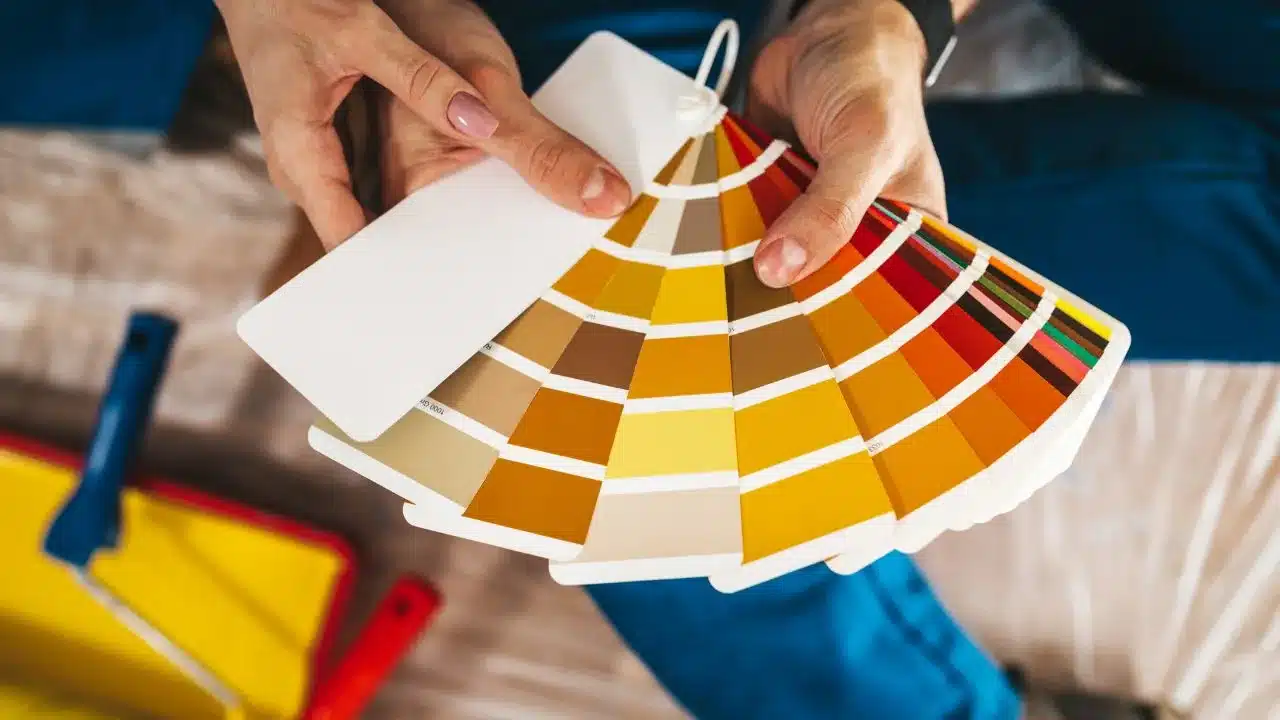
There’s a common assumption that the city’s historic district works from one official, mandatory color list. It doesn’t. Sherwin-Williams developed its Colors of Historic Charleston collection with the Historic Charleston Foundation, and it’s a genuinely useful, curated reference of 48 colors drawn from the city’s architectural history. It isn’t the exclusive or required palette for BAR approval, though. Homeowners can propose other colors, and they’re reviewed case by case on their own merits.
Benjamin Moore offers a comparable resource in its own historical line. Wade Paint Co. works exclusively in Sherwin-Williams and Benjamin Moore premium lines, so either the Sherwin-Williams Colors of Historic Charleston palette or the Benjamin Moore Historical Color Collection is a reasonable starting point for homeowners narrowing down options.
Two colors come up constantly in conversations about the city’s historic homes. Charleston Green, the near-black shade with a hint of dark green, carries a popular story that it originated from leftover paint stock mixed together after the Civil War. That origin is tradition rather than documented fact, but the color itself remains a recognizable part of the city’s historic look. Haint Blue is a different case: a pale blue-green traditionally painted on porch ceilings, rooted in real Gullah Geechee practice rather than legend.
Choosing the right color for a specific house, and understanding what a BAR submission actually needs to include, is easier with an outside eye. Homeowners planning a repaint can book a free color consultation to walk through options before anything goes to the board.
Why Does Paint Type Matter on Historic Masonry and Stucco?
Old brick and stucco in the city are porous by nature, and that porosity is part of what makes paint selection more complicated than picking a color. Limewash and other mineral paints are vapor-permeable, meaning they let moisture trapped in the masonry pass through the coating and evaporate. Acrylic latex doesn’t breathe the same way. Applied to old, porous masonry, it can trap moisture behind the paint film, and that trapped moisture is a common contributor to spalling and blistering over time.
Acrylic latex still has a place. Elastomeric coatings, which Wade Paint Co. uses on suitable stucco and masonry surfaces, serve a different purpose: crack-bridging and waterproofing on substrates that need that kind of protection. Deciding which approach fits a given wall is a judgment call made on-site, based on the substrate’s condition and moisture history rather than a default assumption. More on how Wade Paint Co. approaches these decisions is covered on the exterior painting process and materials page.
What to Verify Before Hiring a Historic Home Painter in Charleston
A historic home is not the project to hand to whoever’s available soonest. A few specific things are worth confirming before signing anything.
1. Confirm Licensing, Bonding and Insurance
Wade Paint Co. operates licensed, bonded, and insured, which is a reasonable baseline to expect from any contractor working on a property this valuable. Confirming this upfront protects the homeowner if something goes wrong mid-project.
2. Verify a Contractor’s Lead-Safe Status Yourself
Since most historic homes here predate 1978, lead-safe work practices matter on nearly every one of these projects. Rather than taking a contractor’s word for a “certified” claim, homeowners can check directly. The EPA maintains a public database where anyone can look up EPA lead-safe certified firms by name or location. That kind of direct verification is more reliable than any badge or claim on a website.
3. Ask About Materials and Historic-Home Experience
Material quality matters more on old substrates that don’t forgive shortcuts. Wade Paint Co. works exclusively with Sherwin-Williams and Benjamin Moore premium lines, with elastomeric options available for masonry and stucco, and brings hands-on experience with the substrate-specific prep described earlier in this guide. Asking a contractor directly about their experience with old-growth wood and historic masonry is a fair and useful question.
4. Understand the Workmanship Warranty Terms
Wade Paint Co. backs its work with a 2-year limited workmanship warranty covering peeling, blistering, or chipping paint caused by defective workmanship. It has real limits worth understanding upfront: it doesn’t cover horizontal surfaces like decks, railings, porches, or gutters, customer-supplied materials, varnished surfaces, galvanized metal, issues tied to pre-existing paint layers or substrate moisture, structural defects, or damage from extreme weather. Materials for any warranty repair are the customer’s responsibility, and the warranty isn’t transferable to a new owner. A contractor willing to walk through those exclusions honestly, rather than just pointing to a warranty as a selling point, is worth paying attention to. Homeowners comparing options across the area can see how this fits into the broader picture on the house painters serving Charleston SC page.
Request a Quote for Historic Home Painting in Charleston

A historic home deserves a painter who understands what’s actually at stake in the work, not just a fresh coat of color. Elliott Hall leads every Wade Paint Co. project hands-on, which matters on a house where substrate conditions, prior paint layers, and moisture issues all require judgment calls specific to that property. The company has been named a Charleston’s Best finalist in both 2022 and 2023, and has built up more than 84 five-star reviews from homeowners across the area.
Historic home painting in Charleston, SC isn’t a project to rush into without the right partner. Homeowners ready to move forward can request a quote from Wade Paint Co. and start the conversation with a team that treats the prep, the regulatory approval, and the finish coat as equally important parts of the same job. To read more about historic home painting restoration guides, check out this page.
Frequently Asked Questions About Historic Home Painting in Charleston
Does Mount Pleasant follow Charleston's BAR process?
No. Mount Pleasant's Old Village is reviewed by the town's own Historic District Preservation Commission, a separate five-member board with its own application system and meeting schedule, distinct from Charleston's BAR.
Is there one official paint color list for Charleston's historic district?
No. Sherwin-Williams' Colors of Historic Charleston is a curated reference collection developed with the Historic Charleston Foundation, not a mandatory or exclusive list. Homeowners can propose other colors for case-by-case approval.
Does replacing a window on my historic home trigger lead paint rules?
Yes. Window replacement always triggers the EPA's Renovation, Repair, and Painting Rule on a pre-1978 home, regardless of how much surface area is involved.
How can I check if a painting contractor is EPA lead-safe certified?
Homeowners can search the EPA's public firm locator directly by contractor name or location rather than relying on an unverified claim.