


Licensed, Bonded, and Insured
84+ Five-Star Reviews
Charleston’s Best Finalist (2022, 2023)
Choosing the Right Paint Finish for High-Traffic Walls

Why the Finish Level Determines Durability
Paint sheen directly reflects resin content. More resin creates a harder, more washable surface. Less resin results in a softer film that absorbs moisture, oils, and impact.
The practical result
The practical result: higher-sheen paints clean easily and resist scuffing. Lower-sheen paints hide surface imperfections but cannot withstand repeated cleaning as well as satin or semi-gloss.
Charleston’s coastal climate
In Charleston’s coastal climate, interior humidity adds another layer of risk. Poorly ventilated rooms — especially bathrooms, laundry rooms, and kitchens — accelerate wear on low-sheen finishes. Flat paint in a bathroom doesn’t just scuff easily; it also absorbs moisture, allowing mildew to develop beneath the surface before it becomes visible.
Sheen level is one factor
Sheen level is one factor. Surface prep and product formulation are the other two. All three must work together for the finish to perform as intended.
Finish-by-Finish: What Each Level Actually Does
Flat / Matte
Eggshell
Eggshell introduces a slight sheen and improved durability over flat. It handles light cleaning — smudges, dust, and occasional marks — but is not designed for repeated scrubbing.
Best for: Living rooms, dining rooms, and most adult bedrooms
Avoid in: High-traffic areas, kids rooms, and bathrooms
Satin
Satin is where durability becomes a functional advantage. With significantly higher resin content than eggshell, it withstands regular cleaning with soap and water without paint transfer. It is the most practical wall finish for active areas of the home.
Best for: Hallways, stairwells, entryways, kids rooms, family rooms, and laundry rooms
Consider for: Kitchens and any wall that requires routine cleaning
In Charleston homes, satin is often the safer default over eggshell in rooms with limited ventilation.
Semi-Gloss
Semi-gloss offers the highest washability among standard interior finishes. It tolerates repeated cleaning without degradation. The tradeoff is visibility — surface imperfections become more pronounced.
Best for: Kitchens, bathrooms, trim, doors, baseboards, and window frames
Caution: Requires proper surface preparation; imperfections will show clearly
High-Gloss
High-gloss delivers maximum hardness and cleanability but is reserved for specialty applications. Any surface defect is magnified, making prep critical.
Best for: Cabinetry, furniture, doors, and accent trim
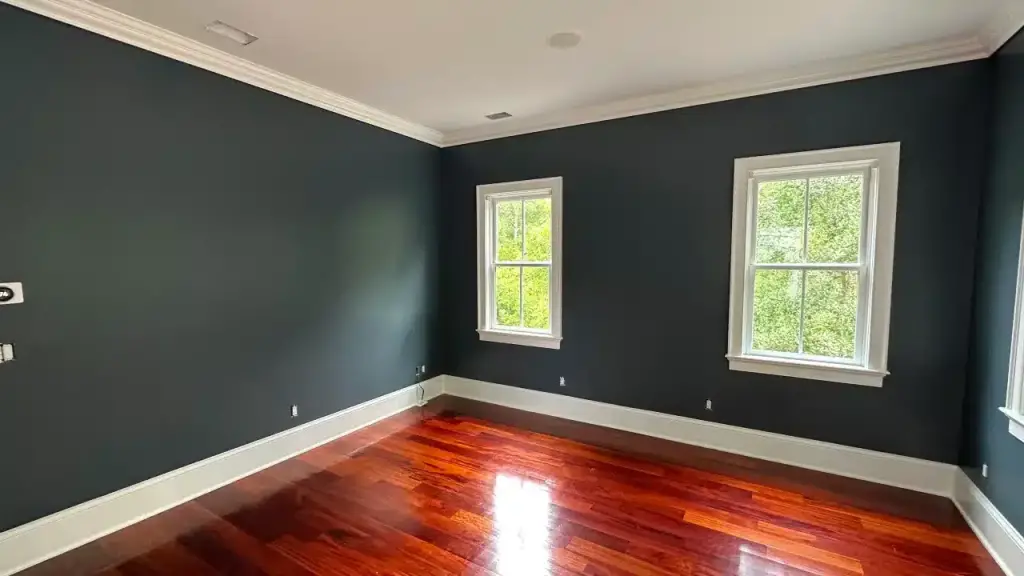
Best Paint Finishes for High-Traffic Areas
High-traffic areas require finishes that can withstand constant contact, friction, and routine cleaning without breaking down.

Hallways and Stairwells
Satin is the correct choice for most Charleston homes. Flat and eggshell will not hold up to daily contact from bags, shoulders, and constant movement. Semi-gloss can work on textured plaster walls, but satin offers the best balance of durability and appearance.
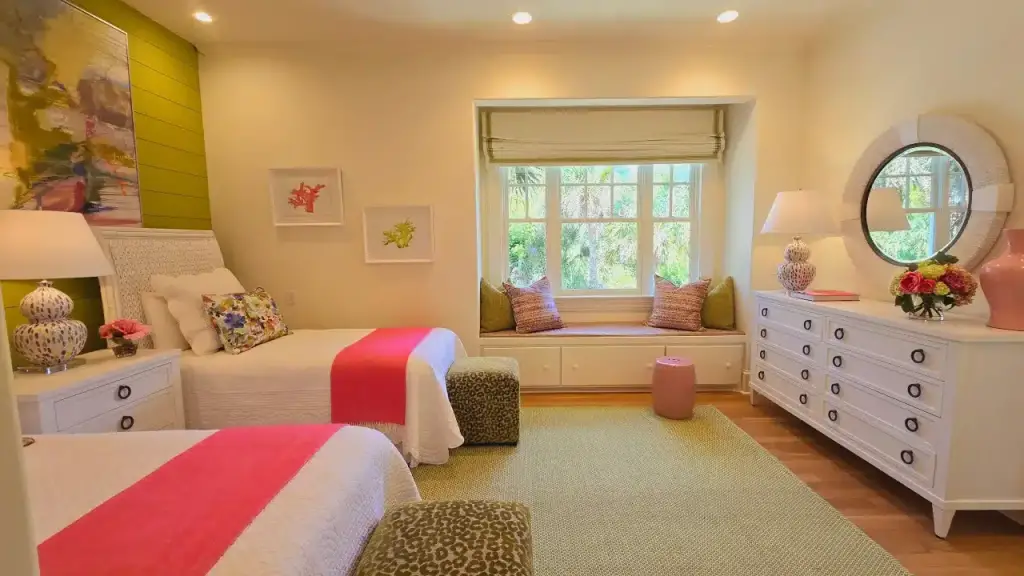
Kids Rooms
Satin at minimum. The difference between eggshell and satin becomes clear the first time a wall needs cleaning. Satin wipes clean. Eggshell does not.
Wade recommends using the same premium satin finish in kids rooms as in adult spaces — the cost difference is minimal, but the performance difference is significant.
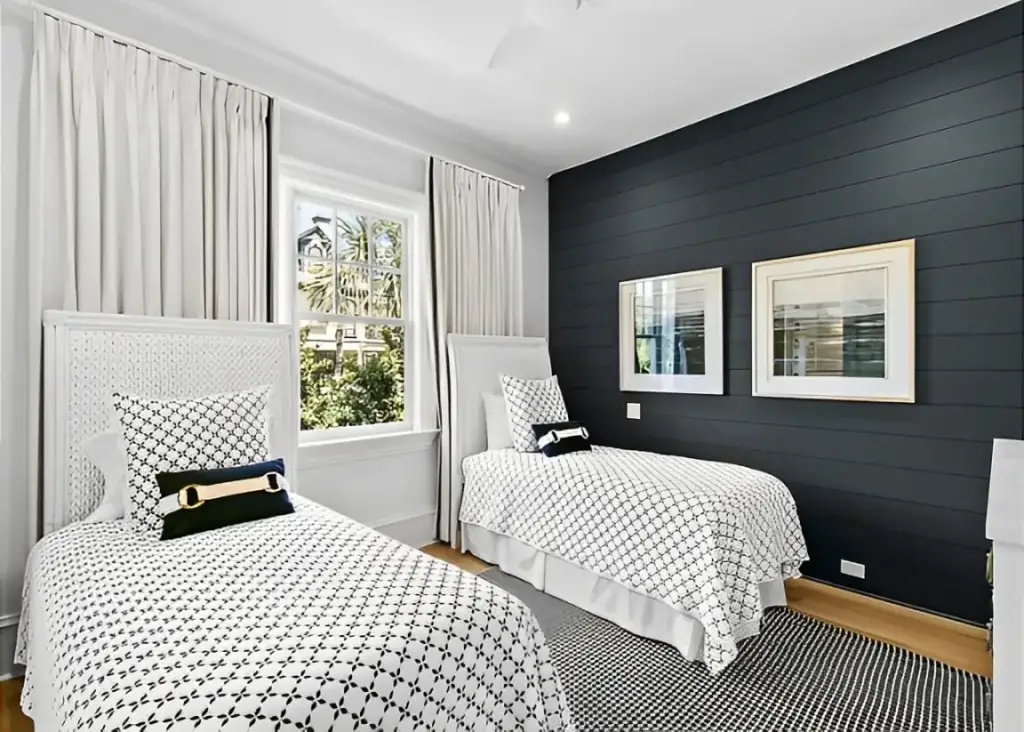
Family Rooms
Use determines the finish. Formal spaces can use eggshell. Active family rooms require satin to handle wear from daily use.
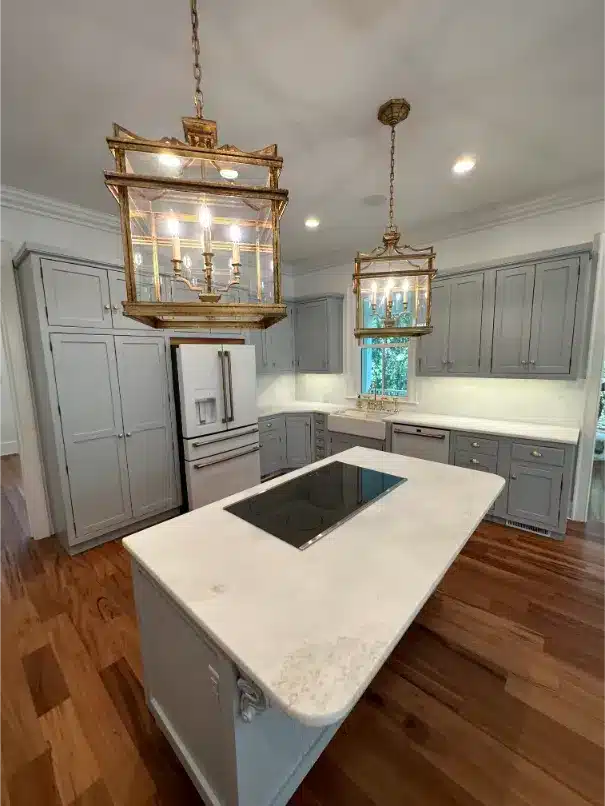
Kitchens
Satin for walls. Semi-gloss for trim, doors, and high-contact surfaces. Kitchens demand higher resin content due to grease, steam, and frequent cleaning.

Bathrooms
In Charleston’s coastal climate, semi-gloss is the most reliable choice for bathroom walls, particularly in showers and tub surrounds. Satin is acceptable in well-ventilated bathrooms, but semi-gloss offers greater moisture resistance and better protection against mildew beneath the paint film.
Products Wade Paint Co. Recommends for Durability
The right finish only performs as well as the product behind it — formulation determines how well the surface resists scuffing, moisture, and repeated cleaning over time.
Benjamin Moore Scuff-X
Engineered for high-impact surfaces. Provides superior scuff resistance for hallways, stairwells, and kids’ rooms. Available in eggshell and satin.
Sherwin-Williams Emerald Interior
Premium formula with built-in mildew resistance — well-suited to Charleston’s humidity. Offers strong washability and coverage in one to two coats. Available across all sheens.
Benjamin Moore Aura Interior
Top-tier product with advanced color retention and durability. Maintains appearance through repeated cleaning. Ideal for whole-home repaints where long-term finish quality matters.
Sherwin-Williams Latitude
Designed for warm, humid climates. Helps prevent moisture-related paint failures common in Charleston homes. A strong option for kitchens, bathrooms, and laundry rooms.
We source all our products through professional channels — not standard retail shelves — and apply them in the correct formulations and sheens for each space.
When Professional Application Makes a Difference
The right finish applied incorrectly will still fail.
Durability depends on proper surface preparation — sanding, patching, and priming where required — along with correct application techniques, including roller selection, coat consistency, and drying time.
Wade Paint Co.’s 2-year workmanship warranty covers peeling, blistering, and chipping caused by application errors because the process is executed correctly from the start.
Ready for interior walls that hold up? Request a free estimate or call (843) 474-5353.
Areas We Serve — Interior Painting in Charleston
Wade Paint Co. provides interior painting services throughout the greater Charleston metro area, including Charleston, Mount Pleasant, West Ashley, Daniel Island, Sullivan’s Island, Isle of Palms, James Island, Johns Island, North Charleston, and Folly Beach.
Get Walls That Last
The finish you choose stays in place until the next repaint. Make the decision based on how the space is actually used — not just how it looks in the can. Matching the right sheen and product to each room prevents premature wear, reduces maintenance, and keeps walls looking clean longer.
Frequently Asked Questions
What interior paint finish is easiest to clean?
Semi-gloss is the most washable interior finish and cleans with soap and water without paint transfer. For walls where a high-gloss look is too much, satin is the next most washable option and the better choice for most living areas. Eggshells can be cleaned gently, but won’t survive repeated scrubbing. Flat paint is not designed to be scrubbed at all.
Is satin or eggshell more durable for walls?
Satin is significantly more durable. The higher resin content creates a harder paint film that resists scuffing, marks, and moisture better than eggshell. The eggshell looks softer and more refined on the wall, but it can’t withstand the same level of use.
What paint finish should I use for a hallway?
Satin, without question. Hallways are among the highest-traffic areas in any home — bags, shoulders, hands, and constant movement against the walls. Flat and eggshell don’t hold up to that contact. Satin wipes clean and stays looking good with normal maintenance.
What is scrubbable paint, and should I use it?
Scrubbable paint, like Benjamin Moore Scuff-X or Sherwin-Williams Emerald Interior, is formulated with enhanced resin systems that allow the surface to be scrubbed repeatedly without degrading the paint film. These products are particularly valuable in hallways, kids rooms, and kitchens.
Does interior paint durability differ in humid climates like Charleston?
Yes. In coastal homes with higher interior humidity, particularly in bathrooms, laundry rooms, and kitchens, low-sheen paints are more susceptible to moisture absorption behind the paint film, which can lead to mildew growth and adhesion failure before the surface shows obvious wear. Satin and semi-gloss finishes with built-in mildew inhibitors (like Sherwin-Williams Emerald Interior) provide better performance in humid rooms than standard eggshell or flat formulas meaningfully.
How often should interior paint be repainted?
Well-applied interior paint in low-traffic rooms typically lasts 7–10 years before showing meaningful wear. High-traffic areas like hallways, kids’ rooms, and kitchens may need attention in 3–5 years if the finish level wasn’t matched to the use. The right finish choice from the start significantly extends the repaint cycle.